
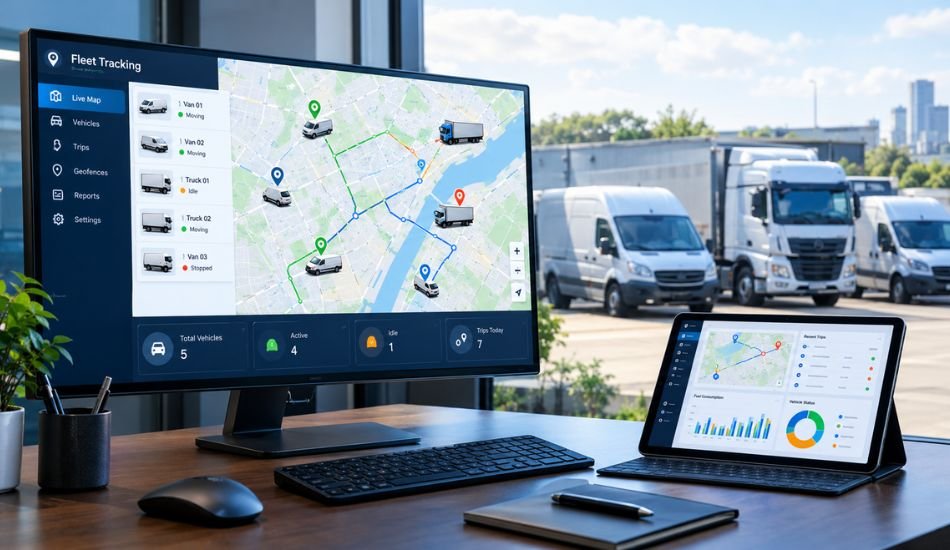
If you’re running any kind of fleet — whether it’s two delivery vans or two hundred long-haul trucks — you’ve probably heard the term “GPS fleet tracking” thrown around a lot lately. And for good reason. What used to be a nice-to-have for large logistics companies has become a pretty standard tool for businesses of every size that rely on vehicles to get work done.
At its core, GPS fleet tracking is a way to know where your vehicles are, how they’re being driven, and how efficiently they’re operating, all in real time. But it’s grown into something much bigger than just a blinking dot on a map. Modern systems combine location data with driver behavior insights, maintenance alerts, fuel usage patterns, and route optimization tools that can genuinely change how a business operates day to day.
In this guide, we’ll walk through what GPS fleet tracking actually is, how it works, the real benefits it offers, what to look for when choosing a system, and some of the common questions business owners ask before making the switch. Whether you’re brand new to the concept or just want to understand it better before investing in a solution, this should give you a solid, practical foundation.
What Is GPS Fleet Tracking, Exactly?
GPS fleet tracking refers to the use of Global Positioning System technology, combined with onboard hardware and software, to monitor the location and activity of vehicles in a company’s fleet. A small tracking device is installed in each vehicle, usually plugged into the OBD-II port (the same port mechanics use for diagnostics) or hardwired for larger trucks and equipment. That device communicates with satellites and cellular networks to send location data back to a central dashboard that fleet managers can access from a computer or phone.
What makes this technology genuinely useful isn’t just the “where” — it’s the “how.” Most GPS fleet tracking systems today record speed, idle time, harsh braking, rapid acceleration, and even engine diagnostics. This means a fleet manager isn’t just looking at a map; they’re getting a fairly complete picture of how each vehicle and driver is performing throughout the day.
It’s worth noting that GPS fleet tracking isn’t a single product — it’s more of a category. Some systems are bare-bones and just show vehicle location. Others are full telematics platforms that integrate with dispatch software, fuel cards, maintenance schedules, and even dash cameras. Because of that range, the “right” system really depends on the size of your fleet, your industry, and what problems you’re actually trying to solve.
How GPS Fleet Tracking Systems Work
The Hardware Side
Every GPS fleet tracking setup starts with a physical device installed in the vehicle. These devices use GPS satellites to determine precise location, then transmit that data using cellular networks (similar to how a smartphone sends data). Some newer systems also use GPS combined with GLONASS or other satellite constellations to improve accuracy, especially in areas with tall buildings or dense tree cover that can interfere with signal.
The installation process itself is usually quick. Plug-in devices can often be installed by the driver in a matter of minutes, while hardwired units for heavy trucks or specialized equipment might require a technician. Either way, most providers design this to be as painless as possible, since fleet downtime during installation is something businesses obviously want to avoid.
The Software Side
Once the hardware is transmitting data, it flows into a software dashboard that fleet managers use to monitor everything. This is really where the value of GPS fleet tracking comes to life. A good dashboard will show live vehicle locations on a map, historical route playback, driver behavior scores, and customizable alerts — for example, notifying a manager if a vehicle enters or exits a specific zone (known as geofencing), or if it’s been idling for an unusually long time.
Many platforms also generate reports automatically, which can be a huge time-saver. Instead of manually pulling data together for fuel usage or mileage reports at the end of the month, the system compiles it for you, often in formats that can be exported for accounting, compliance, or client billing purposes.
Key Benefits of GPS Fleet Tracking
Improved Safety and Accountability
One of the most immediate benefits businesses notice after implementing GPS fleet tracking is a shift in driving behavior. When drivers know their speed, braking habits, and routes are being monitored, they tend to drive more carefully. This isn’t about micromanaging people unfairly — most fleet managers use this data constructively, identifying patterns and offering coaching rather than punishment. Over time, this can lead to fewer accidents, fewer speeding tickets, and lower insurance-related risks.
Fuel Savings and Route Efficiency
Fuel is one of the biggest ongoing costs for any fleet, and GPS tracking systems help control it in a few different ways. Route optimization tools can suggest more efficient paths, cutting down on unnecessary mileage. Idle time tracking helps identify vehicles that are burning fuel while parked, which adds up more than most people realize. Some systems even flag inefficient driving habits, like excessive idling or aggressive acceleration, that quietly increase fuel consumption over time.
Better Maintenance Planning
Many GPS fleet tracking platforms also monitor engine diagnostics and mileage, which allows businesses to schedule maintenance proactively instead of reactively. Catching a small mechanical issue early is almost always cheaper and less disruptive than dealing with a breakdown on the road. This kind of predictive maintenance approach can extend the life of vehicles and reduce unexpected repair costs.
Choosing the Right GPS Fleet Tracking Solution
Consider Your Fleet Size and Industry Needs
Not every business needs the same level of complexity. A small landscaping company with five trucks might just need basic location tracking and geofencing, while a refrigerated freight company might need temperature monitoring, compliance reporting, and integration with electronic logging devices (ELDs). Before comparing providers, it helps to write down the specific problems you’re trying to solve.
Look Beyond the Price Tag
It’s tempting to choose the cheapest option, but it’s worth digging into what’s actually included. Some providers charge extra for features like driver behavior scoring, dash cam integration, or advanced reporting. Others lock you into long-term contracts that can be difficult to exit if the system doesn’t meet expectations. Reading reviews from businesses in a similar industry can offer a more realistic picture than marketing materials alone.
Prioritize Ease of Use
A powerful system that nobody on your team can figure out isn’t actually powerful — it’s just frustrating. Look for a dashboard that’s intuitive, mobile-friendly, and doesn’t require extensive training to operate. Many providers offer free trials or demos, which is a good way to test this before committing.
Common Questions About GPS Fleet Tracking
Is GPS fleet tracking legal?
Yes, in most cases, as long as the vehicles being tracked are owned by the business and drivers are informed that tracking is in place. Laws can vary by region, so it’s a good idea to check local regulations, especially around employee privacy.
Does GPS fleet tracking work without cellular signal?
The device still records GPS location even without cellular coverage, but that data typically won’t transmit to the dashboard until the vehicle re-enters an area with signal. Most systems store this data temporarily and sync it once connectivity returns.
How much does GPS fleet tracking typically cost?
Pricing varies widely depending on the provider, number of vehicles, and features included. Many companies charge a monthly per-vehicle fee, which can range from relatively affordable basic plans to more expensive full-service telematics packages.
Can GPS fleet tracking help lower insurance costs?
In some cases, yes. Insurance providers may offer discounts for fleets that use tracking and safety monitoring, since it often correlates with reduced accident risk. It’s worth asking your insurer directly about any available programs.
Will drivers know they’re being tracked?
Reputable providers and responsible businesses disclose tracking to employees, both for legal reasons and to maintain trust. Transparency tends to lead to better cooperation and more accurate behavior data anyway
Conclusion
GPS fleet tracking has moved well beyond simple location monitoring. Today’s systems offer a genuinely useful mix of safety insights, cost-saving tools, and operational visibility that can make a real difference for businesses that depend on vehicles to keep things running. That said, the technology isn’t one-size-fits-all — the right system depends on your fleet’s size, industry, and specific goals.
If you’re considering implementing GPS fleet tracking, take the time to compare a few providers, ask about what’s actually included in the price, and involve your drivers in the process so the transition feels collaborative rather than intrusive. Done thoughtfully, it’s a tool that can pay for itself many times over through improved safety, efficiency, and peace of mind.
GPS Fleet Tracking is a valuable tool for improving fleet visibility, vehicle management, safety, and daily operations. For more useful technology and business insights, visit Newzispaper.com.