
If you have recently searched for Babeltee, you may have noticed that the term is surprisingly difficult to define. Some online articles connect Babeltee with customizable tea drinks, while others associate the word with bubble tea, fashion, T-shirts, branding, or broader internet culture. This mixture of meanings has made Babeltee an increasingly interesting search term in 2026.
Unlike familiar terms such as green tea, milk tea, or bubble tea, Babeltee does not currently have one universally accepted definition. Recent online sources generally describe it as an emerging or context-dependent term rather than a traditional beverage with a fixed recipe and documented history.
For that reason, understanding Babeltee requires a little more care than simply giving it one definition. The meaning can change depending on where the word appears and how it is being used. In beverage-related discussions, it may refer to a flexible tea concept. In other contexts, it can function as a creative name or branding term.
This article explains what Babeltee means, why it is sometimes connected with bubble tea, what ingredients may appear in a Babeltee-style drink, how it differs from established tea beverages, and why readers should be careful with unsupported claims about its origin.
What Is Babeltee?
Babeltee is best understood as an emerging online term with no single standardized definition. Current web results show several different interpretations, with tea and customizable beverages being among the most common. Other websites use the same word in connection with fashion, apparel, branding, and online culture.
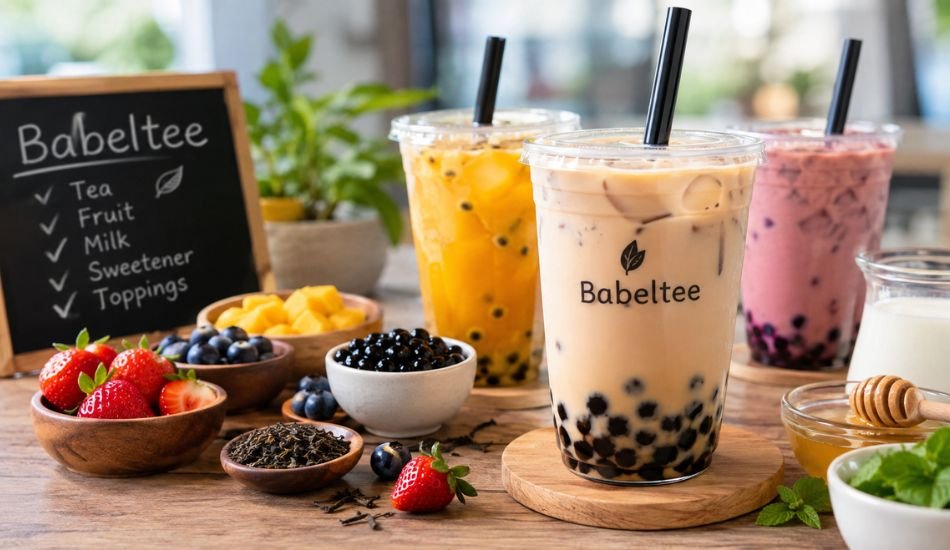
When Babeltee is discussed as a beverage, it is often described as a customizable tea-based drink. The basic idea is relatively simple: start with a tea base and combine it with optional ingredients according to taste. These may include fruit, herbs, milk, sweeteners, spices, ice, or toppings.
However, this should not be confused with an officially recognized tea variety. There is currently no broadly accepted recipe that defines exactly what a Babeltee drink must contain. Recent articles repeatedly point out that the term does not have the same standardized identity as established drinks such as bubble tea.
That distinction is important because online articles sometimes describe Babeltee with very specific ingredients or preparation methods. Those descriptions are better understood as possible interpretations or modern versions rather than a universally agreed formula.
Why Is Babeltee Difficult to Define?
The main reason Babeltee is confusing is that different websites use the word for different purposes. A reader might encounter the term on a beverage article and assume it refers to a new kind of tea. Another person could see it on an apparel-related website and interpret “tee” as a reference to a T-shirt.
Recent online research shows exactly this pattern. Some pages describe Babeltee as a customizable tea concept, while others connect it with fashion and creative branding. There are also articles that treat it as an unusual internet term whose meaning is still developing.
The construction of the word itself may contribute to the confusion. “Babel” can suggest language, communication, diversity, or a mixture of cultures, while “tee” can naturally be interpreted as either tea-related wordplay or an informal reference to a T-shirt. These are possible linguistic interpretations, however, and should not be treated as proof of the term’s original creator or official meaning.
The safest approach is therefore to consider the context. If Babeltee appears alongside drinks, ingredients, cups, tea leaves, or café menus, it is likely being used in a beverage-related sense. If it appears alongside clothing, designs, shirts, or e-commerce products, it may have an apparel-related meaning.
Is Babeltee the Same as Bubble Tea?
One of the most common questions surrounding Babeltee is whether it is simply another name for bubble tea.
The answer is not necessarily.
The similarity between the two names is obvious, and this is probably one reason the terms are sometimes connected online. Bubble tea is an established beverage category with documented Taiwanese roots and recognizable characteristics. It commonly combines tea with ingredients such as milk, fruit flavors, sweeteners, tapioca pearls, jelly, or other toppings.
Babeltee, by comparison, does not currently have the same established definition. Recent sources describe it as a flexible tea-related concept, but they do not establish a universal recipe or prove that Babeltee is an official alternative name for bubble tea.
A Babeltee-style drink could therefore resemble bubble tea without being identical to it. For example, a drink containing tea, fruit, milk, ice, and tapioca pearls could visually and functionally resemble a conventional bubble tea. The name used by a particular seller or creator would depend on that person’s branding or interpretation.
Readers should therefore avoid automatically treating the two terms as synonyms.
What Ingredients Can Be Associated With Babeltee?
Because Babeltee has no standardized recipe, there is no official ingredient list. Nevertheless, beverage-focused online descriptions commonly mention several types of ingredients that can be used in a Babeltee-style drink.
Tea Base
The tea base is generally the starting point. Depending on the interpretation, black tea, green tea, jasmine tea, oolong tea, or herbal infusions may be used.
The choice of tea affects the overall flavor. Black tea can provide a stronger and more traditional tea character, while green tea may produce a lighter taste. Jasmine and other floral teas can add an aromatic element.
Fruits
Fruit is another frequently mentioned component. Mango, strawberry, peach, passion fruit, lemon, berries, and similar flavors may be used in creative versions described online.
Fresh fruit, fruit puree, juice, or flavored syrups can all produce different results. There is no evidence that one particular fruit is mandatory for Babeltee.
Milk and Plant-Based Alternatives
Some interpretations include milk to create a creamy drink. Dairy milk can be used, while plant-based alternatives such as oat, almond, soy, or coconut milk may also fit a customizable tea concept.
Whether milk belongs in the drink depends entirely on the particular recipe or product. Babeltee should not automatically be assumed to be a milk tea.
Sweeteners
Sugar, honey, syrups, or fruit-based sweeteners may be added according to taste. Since the term has no fixed recipe, the level and type of sweetness can vary considerably.
This flexibility is one of the characteristics that makes the beverage interpretation of Babeltee different from a tightly standardized recipe.
Toppings
Some online descriptions also connect Babeltee with toppings associated with modern tea drinks. These can include tapioca pearls, popping pearls, fruit jelly, or coconut jelly.
Again, these ingredients are optional possibilities rather than requirements. Recent articles specifically caution that Babeltee does not have a universally accepted recipe.
How a Babeltee-Style Drink Could Be Customized
The strongest recurring idea in beverage-related discussions about Babeltee is customization.
A person could begin with a preferred tea base and then decide whether to add fruit, herbs, milk, sweetener, ice, or toppings. This creates a drink that can be adjusted according to flavor preferences.
For example, someone who prefers a refreshing drink might choose green tea, lemon, fruit, and ice. Someone looking for a creamier combination could select black tea, milk, and a moderate amount of sweetener.
Another person might prefer a floral combination using jasmine tea, fruit, and light sweetness. These examples demonstrate the concept of customization rather than an official Babeltee formula.
It is also worth remembering that adding multiple ingredients does not automatically make a drink “Babeltee.” The term remains informal and context-dependent. A seller, café, blogger, or creator may use the name differently.
Babeltee and Modern Beverage Culture
The interest surrounding Babeltee reflects a broader trend in modern beverage culture: people increasingly enjoy drinks that can be personalized.
Cafés and beverage businesses commonly allow customers to choose tea bases, sweetness levels, milk options, flavors, temperatures, and toppings. This approach gives consumers more control over the final drink.
Babeltee fits naturally into this broader idea when it is used as a tea concept. Rather than representing one strict traditional recipe, it can be interpreted as a creative combination of flavors.
At the same time, readers should distinguish between a general trend and an established commercial category. The current online evidence does not demonstrate that Babeltee has become a universally recognized beverage category comparable with bubble tea, matcha, or traditional milk tea.
Does Babeltee Have a Known Founder or Origin?
This is one area where caution is especially important.
Current search results do not provide strong, consistent evidence identifying one universally recognized founder, inventor, company, country, or launch date for Babeltee. Several recent articles explicitly note the absence of a clearly documented origin story.
Some websites may offer explanations about how the term was created, but those explanations should not automatically be accepted as historical fact unless supported by reliable primary evidence.
The same applies to claims that Babeltee originated from a specific café, company, social media creator, or country. At present, the available online evidence does not establish one definitive story that can safely be presented as the official history of the term.
This is especially important for articles about emerging keywords because repeated claims can sometimes make an unsupported statement appear authoritative simply because several websites repeat it.
Babeltee as a Fashion or Branding Term
Another interesting aspect of Babeltee is its use outside beverages.
Some recent websites connect the word with fashion and T-shirts. In this context, “tee” may be interpreted as the familiar informal term for a T-shirt, making Babeltee a possible creative apparel or branding name.
This demonstrates why a single definition can be misleading. The same keyword can be used by different websites for completely different products or concepts.
If someone encounters Babeltee on an apparel website, they should examine the specific company’s product descriptions, contact information, terms, and other business details rather than assuming that the site is connected to a tea-related Babeltee concept.
Likewise, a beverage article should not automatically be used as evidence about an unrelated fashion product using the same name.
Why Are People Searching for Babeltee?
There are several possible reasons for the growing interest in Babeltee.
First, the word resembles “bubble tea,” making people curious about whether they have discovered a new variation of a familiar drink.
Second, unusual and distinctive words often attract attention online. A term that does not have an obvious definition can encourage searches because users want to understand what they have encountered.
Third, different websites are using Babeltee in different contexts. As more pages discuss the term, search engines can display a mixture of interpretations, increasing curiosity and confusion.
Recent 2026 articles consistently describe Babeltee as an emerging keyword with multiple online uses rather than a subject with one universally accepted definition.
What Should You Check Before Trusting Information About Babeltee?
When researching an unfamiliar keyword such as Babeltee, it is useful to check the source before accepting detailed claims.
Look for a clearly identified company or organization when a page claims that Babeltee is a commercial product. Check whether the claimed company has an official website and verifiable business information.
For beverage claims, look for an actual menu, product page, recipe source, or other primary evidence. A blog repeating information from another blog is not necessarily independent confirmation.
Readers should also be cautious about claims involving health benefits. A tea containing fruit or herbs may sound healthy, but the presence of those ingredients does not automatically establish a specific medical benefit. Similarly, sweetness, caffeine, calories, and allergens can vary depending on the actual ingredients used.
Most importantly, distinguish between what is verified and what is merely described online. This is particularly important with Babeltee because its current online meaning remains unsettled.
Frequently Asked Questions About Babeltee
What is Babeltee?
Babeltee is an emerging online term that does not currently have one universally accepted definition. In beverage discussions, it is often used for customizable tea-based drinks, while other websites use the word in fashion, branding, or broader internet contexts.
Is Babeltee a type of bubble tea?
Not officially. Some online descriptions connect Babeltee with bubble-tea-style drinks, but there is no strong evidence that Babeltee is universally recognized as another official name for bubble tea.
Does Babeltee have a fixed recipe?
No established standard recipe has been identified. Ingredients described online may include tea, fruit, herbs, milk, sweeteners, ice, and optional toppings.
Is Babeltee a brand?
The name can be used as a brand or creative label in different contexts, but current search results do not establish one universally recognized Babeltee company or owner.
Does Babeltee always contain tapioca pearls?
No. Tapioca pearls may appear in some bubble-tea-inspired interpretations, but they are not an established requirement for every use of the term.
Is Babeltee a traditional tea?
There is currently no reliable evidence establishing Babeltee as a traditional tea variety with a long-standing cultural history. It is more accurately described as an emerging online term.
Final Thoughts on Babeltee
Babeltee is an interesting example of how internet language can develop faster than standardized definitions. Current online sources use the word in several ways, with customizable tea drinks being one prominent interpretation and fashion, branding, and other creative uses appearing elsewhere. The available evidence does not currently support assigning one definitive meaning, founder, recipe, or origin to the term.
For readers searching for Babeltee, the best approach is to consider the context in which the word appears and verify specific claims before treating them as established facts. If the term is being used for a beverage, it may describe a customizable tea concept that borrows ideas from modern drink culture, including fruit, milk, sweeteners, herbs, ice, and optional toppings. If it appears in another context, its meaning may be completely different. As more people use and search for the term, its meaning may become clearer over time. For more informative articles and emerging online topics, newzispaper continues to explore subjects that attract attention across the digital world.