
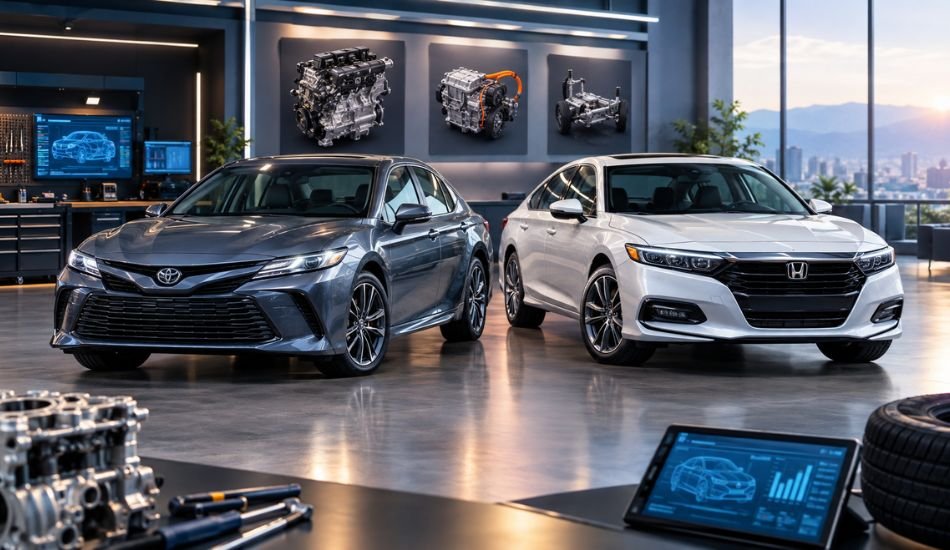
If you’re shopping for a dependable car, the Toyota vs Honda question probably came up within the first ten minutes. Both Japanese brands have spent decades building a reputation for cars that start every morning, sip fuel, and hold their value. That’s great news for buyers, but it also makes the decision harder, because neither brand has an obvious weakness.
This guide breaks down Toyota vs Honda in plain language: reliability, model lineups, driving feel, hybrids, safety, and what ownership really costs. By the end, you should know which brand fits your priorities, and what to check before you sign anything.
Toyota vs Honda: The Big Picture
Toyota vs Honda are two of the largest carmakers in the world, and both built their names on efficient, well-engineered everyday vehicles. You’ll find their sedans, SUVs, and hybrids in driveways everywhere, from first-time buyers to families to people who simply want a car that never causes drama.
The brands do have slightly different personalities. Toyota tends to be conservative and methodical: it improves proven designs a little at a time and rarely rushes new technology to market. Honda has always had a more engineer-driven reputation, known for clever packaging, willing engines, and cars that feel a bit more alive from behind the wheel.
There’s no universal winner in Toyota vs Honda. The better choice depends on what you value most, whether that’s maximum peace of mind, a sportier drive, a bigger truck, or the most spacious cabin for the money. Model availability also varies by country, so the exact lineup you can buy depends on where you live.
Reliability and Long-Term Ownership
Reliability is usually the headline in any Toyota vs Honda debate, and both brands have earned their reputations. Independent owner-survey rankings, from organisations such as Consumer Reports and J.D. Power, have regularly placed both near the top of the mainstream brands. It’s a rare category where you can pick either one and land on solid ground.
Toyota’s Track Record
Toyota’s reputation rests on durability, especially in vehicles like the Corolla, Camry, Land Cruiser, and Hilux/Tacoma. The company tends to stick with mature engines and transmissions instead of chasing every new trend, which often means fewer first-year surprises. Many owners report cars and trucks running for a very long time with routine maintenance.
Honda’s Track Record
Honda earned its reputation with durable engines and well-built small cars, and models like the Civic, Accord, and CR-V are everywhere for good reason. Some past generations had specific problems, such as certain transmissions or turbocharged small engines that drew complaints, so it pays to research the exact model year. Honda’s overall record is still strong, and most owners are happy.
The honest caveat is that a brand’s reputation doesn’t guarantee any individual car. Maintenance history, driving conditions, and the specific engine and model year matter more than the badge. A well-maintained used Honda can easily outlast a neglected Toyota, and vice versa, so always check service records and get an independent inspection when buying used.
Model Lineups: Sedans, SUVs, Trucks, and Minivans
Both brands cover almost every segment, so your body-style needs may narrow the choice quickly. Model names and availability differ by market, so treat the examples below as a guide rather than a shopping list.
In compact and midsize sedans, the classic matchups are Corolla vs Civic and Camry vs Accord. The Civic often gets credit for a sportier feel and a roomy back seat, while the Corolla focuses on easy, low-fuss ownership. Between the larger two, the Accord has a reputation for polish and space, and the Camry for comfort and efficiency, particularly in hybrid form.
Crossovers and SUVs are where most buyers end up. The RAV4 and CR-V are the two big rivals, and both are practical, efficient, and easy to live with. Toyota’s wider SUV range is a real advantage if you want something more rugged, since options like the 4Runner and Land Cruiser have loyal followings for off-road capability, while Honda leans toward family-friendly crossovers like the Pilot and Passport.
If you need a truck or a minivan, the picture is more lopsided. Toyota offers more choice in pickups with the Tacoma and Tundra, while Honda’s Ridgeline is a comfortable, car-like truck that suits light-duty work better than heavy towing or serious off-roading. For minivans, the Honda Odyssey and Toyota Sienna are both excellent family haulers, and the Sienna has moved to a hybrid-only powertrain in recent years.
Driving Experience and Comfort
On the road, Honda generally feels a little lighter and more responsive. Steering tends to be crisp, and many Honda models, the Civic in particular, are enjoyable on a winding road without being uncomfortable on a commute. If you like feeling connected to the car, Honda is often the better match.
Toyota traditionally tunes its cars for comfort and predictability. The ride is usually smooth and quiet, which is great for long highway days and stop-and-go traffic. In recent years Toyota has made many of its models more engaging to drive, so the old idea that it only builds “appliances” isn’t as true as it used to be.
Interiors and space are worth checking in person. Honda is often praised for clever cabin packaging and generous rear-seat room, while Toyota cabins tend to feel sturdy and straightforward. Since comfort is personal, the best advice in the Toyota vs Honda debate is to test drive both on roads you actually use, ideally for more than a few minutes, and pay attention to seat comfort, visibility, and noise.
Hybrids and Fuel Economy
Toyota has a major head start in hybrids. The Prius arrived in the late 1990s and helped make hybrid cars mainstream, and Toyota has spent decades refining the technology. Today you can find hybrid versions across a big share of its lineup, which is a big reason many buyers looking for efficiency start with Toyota.
Honda has been expanding its hybrid offerings too, with hybrid versions of popular models like the Accord and CR-V, and its two-motor system is generally regarded as smooth and efficient. It may not match Toyota’s breadth of hybrid choices in every market, but it’s a serious contender for anyone who wants lower fuel costs without giving up driving enjoyment.
Fuel economy varies widely by model, engine, and driving style, so check official ratings for the exact versions you’re considering rather than relying on brand generalisations. The same goes for fully electric options: both companies have been more cautious than some rivals, so if you want an EV, compare the current lineup and charging support in your area carefully.
Safety Features and Technology
Both brands include driver-assistance packages on most modern models. Toyota vs Honda calls its suite Toyota vs Honda Safety Sense, and Honda calls its version Honda Sensing. Typical features include automatic emergency braking, lane-keeping assistance, and adaptive cruise control, though exactly what’s standard depends on the model, trim, and country.
Don’t rely on marketing claims alone. Look up crash-test results from independent bodies such as IIHS and NHTSA in the US, Euro NCAP in Europe, or the equivalent programme in your region, and compare the specific model year you plan to buy. Ratings can change between generations, so an older result doesn’t always apply to a newer car.
Infotainment has improved on both sides. Most current models offer touchscreens with Apple CarPlay and Android Auto, though the quality of the menus and how responsive the screen feels varies. It’s worth spending a few minutes in the showroom pairing your phone and using the system, because a frustrating screen can become a daily irritation.
Cost of Ownership and Resale Value
Purchase prices between comparable Toyota vs Honda models are usually close, so the price difference tends to come down to trim level and options. Both brands are known for strong resale value, which softens the real cost of ownership when it’s time to sell or trade in. Toyota vs Honda
trucks and SUVs are often especially sought after on the used market, though popular Hondas hold their value well too. Running costs are typically reasonable for both. Parts and service are widely available in most markets, and routine maintenance is generally affordable. Insurance costs depend on your location, driving record, and the specific model, so get quotes before you commit rather than assuming one brand is cheaper to insure.
If you’re considering a hybrid, ask about the battery warranty and how long the coverage lasts in your country, since terms differ. For any used purchase, budget for a pre-purchase inspection and check whether recalls have been handled. Total cost of ownership is about the whole picture, not just the sticker price.
How to Choose Between Toyota vs Honda
Start with your priorities. If your top concern is low-drama reliability, a wide hybrid choice, or a rugged truck or SUV, Toyota vs Honda is often the natural first stop. If you want a more engaging drive, clever interior space, or a sporty-leaning compact, Honda deserves a serious look.
Then narrow it down by model rather than brand. Make a shortlist of two or three specific vehicles, compare their official fuel economy and safety ratings, read owner reviews for the exact model year, and see what similar cars sell for locally. It’s also smart to compare the Toyota vs Honda options against a couple of non-Japanese rivals, so you know you’re getting a fair deal.
Finally, drive them back to back if you can. Numbers on a spec sheet can’t tell you how a seat feels after an hour or whether the controls make sense to you. Trust your own experience, and don’t be afraid to walk away from a dealer if something doesn’t feel right.
Toyota vs Honda FAQs
Which is more reliable, Toyota or Honda?
Both brands regularly score near the top in independent reliability surveys, so neither is a risky choice. Toyota is often seen as slightly more conservative and durable, while Honda’s record is also strong but varies more by model and generation. Maintenance and the specific model year usually matter more than the badge.
Is Toyota or Honda better for fuel economy?
It depends on the specific model. Toyota vs Honda has a longer history with hybrids and a broader hybrid range, but Honda’s hybrids are competitive too. Compare official fuel economy ratings for the exact versions you’re considering.
Which brand holds its value better?
Both hold their value well compared with many other brands. Toyota’s trucks and SUVs are often especially strong on the used market, but popular Honda models can do just as well. Local demand, condition, and mileage make a big difference.
Is Honda more fun to drive than Toyota?
Honda has a reputation for lighter, sharper handling, particularly in cars like the Civic. Toyota vs Hondatraditionally focuses on comfort but has made many recent models more engaging. A test drive is the best way to decide, since feel is personal.
Should I buy a new or used Toyota or Honda?
New cars offer full warranty coverage and the latest safety technology, while used ones cost less and depreciate more slowly. Both brands are popular used buys because they age well, but always check service history, recall status, and get an independent inspection before purchasing.
Conclusion
The Toyota vs Honda choice isn’t about picking the “good” brand and avoiding the “bad” one, because both make excellent cars. Toyota vs Honda shines in reliability reputation, hybrid variety, and rugged trucks and SUVs, while Honda stands out for driving feel, interior packaging, and well-rounded compact cars.
Whichever way you lean, focus on the specific model, the model year, and the car’s history rather than relying on brand loyalty alone. Check independent safety ratings, compare real running costs, and take your shortlist for a proper test drive.
Do that, and you’ll likely end up with a car you’re happy to own for years, whichever badge is on the front.